





If you often find yourself finishing a filling meal but still feeling hungry, or starting to feel hungry again within an hour or so after eating, it’s normal if you feel frustrated.
Maybe you’re constantly thinking about your next snack.
Maybe you can eat dinner and still find yourself rummaging through the cupboard an hour later.
Or perhaps you’re trying really hard to “eat well” during the day, only to feel absolutely ravenous by the evening.
As an ADHD and Binge Eating Dietitian who helps women reduce food noise, cravings and feel more in control of food, I hear the question “Why am I always hungry?” every day.
In this article, I’m going to explain why this is happening and what you can do to regulate your appetite and cravings without needing more willpower or medication.
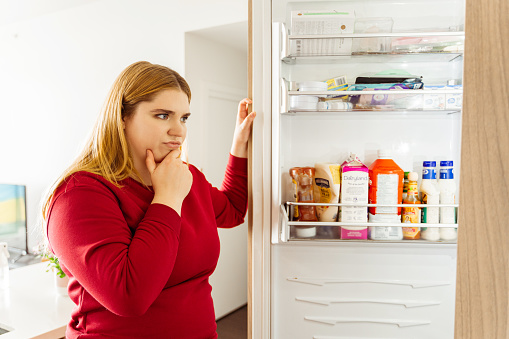
Why you always feel hungry
First of all, there’s nothing wrong with you if you always feel hungry.
It’s incredibly common, especially for women with ADHD, and there are five main reasons why this is happening
- You’re not eating regularly or enough and are naturally hungry more often
- Your hunger and fullness hormones (leptin and ghrelin) are contributing to an increased appetite and decreased satiety.
- You’re confusing the different types of hunger; physical, emtional and sensory
- Your meals or snacks are filling but not satisfying
- You’re food thoughts and beleifs are increasing the intensity of food cravings
I’m going to explain all five in more detail below (number three is the biggest ah-ha for most women)
1. You’re not eating enough
The main reason women I work with always feel hungry, even after they’ve eaten, is usually because they’re not eating regularly or enough food.
They might be intentionally or unintentionally restricting food, or coming out of a period where food was scarce, and now extreme hunger is showing up.
This is based on the physiology and psychology of hunger. When our bodies experience a period without enough food, our brain can think about it more and change our biological response to help restore energy and nutrition stores faster. It’s a common phenomenon seen in eating disorder recovery, which usually resolves over time.
This food restriction can be intentional (e.g reducing your calorie intake to try and lose weight) or unintentional (e.g. getting distracted, hyperfixated and forgetting food exists.
The most common type of food restriction I see as an ADHD Dietitian is unintentional, and it’s why eating regularly can be harder for ADHDers.
They’re navigating hyperfocus, time blindness, appetite changes from medication, lower interoceptive awareness (aka they can’t always register their hunger and fullness cues), and can forget to eat, and then at 4 pm they suddenly realise they’re starving.
Which is why it’s so common for the women I help to feel extra hungry in the afternoon and night. Their bodies are playing catch-up.
“Sometimes feeling “out of control” around food starts much earlier in the day, when your body simply didn’t get enough food and is now screaming out for energy”
It’s not just about eating regularly; it’s also about eating enough.
You can eat three meals a day plus snacks and still feel hungry if you don’t have enough carbs, protein, fats and fibre.
The classic example is eating “empty calories” or low-carb meals. You might feel physcially full after eating a big salad with grilled chicken, but if it’s carbs, fats, flavour, texture and satisfaction, don’t be surprised if you still feel hungry after eating.
This is all about the difference between fullness and satisfaction.
2. Your meals and/or snacks are filling but not satisfying
The second reason you’re always feeling hungry, especially after just eating if because your meals or snacks are filling but not satisfying or vice versa. In order for humans to not feel hungry for 3-4 hours, our meals and snacks need to be both filling and satisfying.
Sometimes a meal can be filling, but not satisfying and sometimes it can be satisfying, but not filling.
The way to stop feeling hungry all the time is to focus on making your meals and snacks tick both boxes: filling and satisfying.
How do you do that? I show you how inside my mini-course Eat for Executive Function – learn more here
3. You’re confusing the different types of hunger
One of the biggest “aha” moments for my clients, who tell me they’re always hungry, is when I explain that we have three different types of hunger: physical, emotional and sensory.
I say to them, “Yes, you’re constantly hungry. But is it food you’re really hungry for, or is it something else“
Physical hunger – we need energy/fuel and nutrition
Emotional hunger – we need connection, comfort, reward, relief, entertainment, safety
Sensory hunger – we need a specific taste, texture, smell, temperature, or sound (this is more resonant with food cravings and dopamine seeking e.g. I want THAT food)
In a world fuelled by diet culture that encourages us to ignore our physical hunger, it’s normal to start confusing our energy, emotional and sensory needs.
While food is the only way to settle physical hunger cues, it’s not the only way to calm emotional and sensory hunger.
We have hundreds of activities to help soothe and meet our sensory and emotional needs, but in an overstimulating world that drains our emotional battery, food can easily become our go-to for any sensation of hunger, even if it’s not for our physical needs.
If you can resonate with this point, you don’t need to be an expert at differentiating between the different types of hunger, but it’s helpful to have a general awareness of your body signals and what they’re trying to tell you.
Remember two things
- Eating for comfort isn’t automatically a problem
- All three types of hunger can occur at the same time
You can be physically hungry AND want a comfort food that’s sensory-specific
If you’re only honouring physical hunger, then don’t be surprised if you still feel hungry after eating because your emotional and sensory needs are still waiting to be met.
The issue may be when food becomes the only strategy available or when eating leads into distress, guilt or feeling out of control.
A salad with lots of vegetables and some protein may be filling and nutritious, but it might not keep you satisfied for very long.
That’s why we practice Gentle Nutrition at Balance and Bite, which isn’t just about making a meal filling and nutritious; it’s also about making it satisfying.

4. Your hunger and fullness hormones (leptin and ghrelin) are contributing to an increased appetite and decreased satiety
Another explanation for your constant hunger may be biological, with changes in your ghrelin (which helps stimulate appetite) and leptin (which helps signal fullness and satiety) levels.
Research has found that sleep deprivation has one of the greatest impacts on increasing ghrelin.
Stress can also affect appetite hormones; studies have found increases in ghrelin after psychological stress, although leptin responses are less consistent.
Hormonal changes across the menstrual cycle can also influence appetite and cravings, with increased sweet cravings and uncontrolled eating particularly in the late luteal phase.
So if your appetite suddenly feels louder during poor sleep, high stress or certain points in your cycle, there may be genuine biological reasons for that.
5. Your food thoughts and beliefs are increasing the intensity of food cravings
This reason for always feeling hungry is linked to our reward circuits and relationship with food. Research shows that when a food is seen as
As we spoke about earlier in the article, the importance of removing physical restriction of food, we also need to remove mentally restricting food.
Picture this: you’re sitting on the couch at 8.30 pm. You’ve just finished dinner an hour ago (a plate of meat and vegetables), and now you’re starting to feel hungry again; you’re starting to think about the other food you have in the house, especially the fun, delicious and enjoyable foods. But as soon as the thought of that block of chocolate pops into your mind, it’s met by a familiar inner voice that screams “You don’t need that”, “you should be good”, “I can’t have that” or “you’re not even hungry”.
As soon as we tell ourselves we can’t have something, we can want it even more, making our feelings of hunger or cravings intensify until they feel insatiable.
“The answer to constantly thinking about food isn’t necessarily becoming better at saying no to it; it’s getting curious about why the food thoughts are showing up in the first place”
This is where working on your relationship with food can be incredibly helpful and powerful! There are two activities I teach inside my program Food Chaos to Calm that help my clients feel more in control of food.
- Challenge the food police by removing any moral labels from food like good vs. bad or healthy vs. unhealthy and instead focusing on what a food gives you, e.g. fibre, carbs, joy, stimulation, connection, etc.
- Increase permission to eat ALL foods, so they feel less exciting, urgent or scarce
How do I stop feeling hungry all the time? Start here …
Here’s the TLDR of this article, if you just want someone to tell you how to stop feeling hungry all the time. The answer isn’t automatically to be more disciplined or eat more consistently.
Sometimes your body needs more energy
Sometimes your brain needs something.
Sometimes food rules are making the problem louder.
And sometimes several of those things are happening at once.
Understanding what’s driving your eating gives you somewhere much more useful to start than blaming yourself.
Start by asking yourself these five questions:
- Am I eating regularly enough? Ideally every 3-4 hours
- Am I eating enough? A mixture of protein, carbs, fats and fibre in most meals
- Are my meals satisfying me? Including ingredients that support your emotional and sensory needs
- Am I restricting foods mentally or physically? Can you eat ALL foods without attaching any emotional or moral attachment?
- What else might I be needing right now – comfort, stimulation, rest, connection?
Any question you answered “NO” to is where you need to focus first, and in the order of the questions.
- Going 5-6 hours without eating, then feeling starving? Focus on eating every 3-4 hours first.
- Eating regularly but still feeling hungry? Focus on making your meals more filling first.
👉 Not sure where to start first?
TAKE THE 60 SECOND QUIZ | We’ll help you get crystal clear on why you’re feeling out of control with food, and your first next step!
When should constant hunger be checked by a health professional?
While changes in hunger are normal, if constant hunger is new, extreme, unexplained or accompanied by other concerning symptoms, I’d recommend speaking with an appropriate healthcare professional.
If physical hunger is frequent and intense, I’d recommend speaking with your GP about a referral to an endochronologist who can check for any abnormalities or changes in your hormones that could be impacting your appetite.
If emotional hunger is more frequent, I’d recommend speaking to your GP about medications or a referral to a psychologist/counsellor to support your emotional and mental health needs.
If sensory hunger is frequent (or you’ve noticed it your whole life 😓- Hii, fellow late-diagnosed ADHDers), you may find it helpful to discuss ADHD dopamine seeking with your GP or psychologist.
Want to feel more in control with food?
👉 Join the waitlist* for our signature program, Food Chaos to Calm
*Get priority access, early-bird pricing, exclusive bonuses and more
Erin’s an Accredited Practising Dietitian & Certified Intuitive Eating Counsellor. She uses a non-diet approach and weight-inclusive care to help her clients reclaim a healthy relationship with food and their bodies free of guilt, shame and restriction.
View comments
+ Leave a comment